In the modern world of industrial automation, equipment is usually scattered across large plants pumps, substations, as well as utility networks and other locations that are remote. Monitoring each field device by hand is inefficient, particularly when users require immediate information from several places. This is why an RTU panel comes in. An RTU panel combines a Remote Terminal Unit, input/output interfaces, communication equipment terminals, power supplies, and other components that protect the system in an organised enclosure. It permits the field information to be gathered and processed, then communicated and, if needed, utilized to remotely control equipment. RTUs are typically connected to SCADA as well as other supervisory systems to provide remote monitoring and control.
What is RTU panel exactly? What is its purpose? What components is it made up of and what function does Modbus RTU play in industrial communication? This guide provides seven key points to consider before selecting or using an RTU panel within an automation system.
What Is RTU Panel and What Does It Do?
An RTU panel can be described as an industrial communication and control enclosure built around a Remote Terminal Unit (RTU). Its primary function is to link equipment in the field to a centralized monitoring or control system like SCADA.
The RTU is an interface between the physical equipment and the supervisory system. It collects signals from meters, sensors as well as transmitters, switches and other devices in the field, analyze these signals, and then sends the resultant information to the control center. Based on the settings, it could also take commands from the control center and operate the connected equipment.
An RTU panel improves this function one step further by offering an organized installation that contains the RTU as well as the other supporting components. A typical RTU panel might comprise:
- Remote Terminal Unit or RTU controller
- Digital input and output modules
- Analog input and output modules for analog
- Interfaces for communication
- Circuit protection and power supply
- Blocks for terminals
- Interface modules and relays
- Communication gateways, also known as switches
- Protection against surges and isolation devices
- Industrial enclosure
- Cable management and wiring components
The precise configuration is contingent on the particular application. A smaller RTU Panel for a pumping station might be relatively basic in terms of I/O and communications arrangement, whereas the substation or utility installation may require extensive I/O, redundant communications with multiple protocols, logs of events, and sophisticated security.
The most important thing to note is the fact that an RTU panel is not just an electrical box that houses an RTU. This is an engineer-designed system that provides the necessary interfaces and infrastructure to ensure effective remote control and monitoring.
Data Acquisition From Field Devices
One of the main purposes of the RTU panel is to acquire data. Field instruments provide information on what happens in the process. For instance, a water treatment facility could require surveillance:
- Water level
- Rate of flow
- Pressure
- Status of the pump
- Valve position
- Motor Current
- Tank level
- Equipment alarms
Analog inputs receive constantly shifting signals, whereas digital inputs can be used to detect certain conditions such as ON/OFF status the position of the breaker or alarm states. The RTU is able to process those signals and make the data available to a supervisory system.
Remote Control of Equipment
An RTU panel also supports remote control. For instance, an operator who is working in SCADA control room might have to turn on an engine or stop a motor, alter a setpoint, as well as operate an instrument without physically traveling to the remote location.
Depending on the system design, the RTU is able to receive the request, then applies the specified logic or interlocks, and sends the appropriate signal output to equipment in the field. This ability can cut down on manual intervention and increase the speed of response, especially when operating in a geographically dispersed manner.
Why Is an RTU Panel Important?
RTU panels are particularly valuable when field equipment is spread across large areas. Utilities, wastewater and water facilities, energy infrastructure pipelines, oil and gas infrastructure, and industrial sites are able to make use of RTU-based systems to consolidate information from assets that are located far away.
Modern RTUs support a variety of communications technologies and industrial protocols. The RTU can send appropriate commands for control to field equipment in the event that the system has been specifically designed for remote control.
How Does an RTU Panel Work With Modbus RTU?
The most crucial concepts to comprehend when working using the RTU panel will be Modbus RTU. Modbus RTU refers to a serial-based version in the Modbus protocol, which is widely used for communicating with industrial machines. It is typically connected to RS-485 networks and is often utilized in drives, meters PLCs, sensors, I/O modules, and various other automation equipment.
It is essential to differentiate between the two words: RTU panel is the panel’s physical design and its automation system based on RTU. Modbus RTU is an interface protocol or mode that allows you to transfer information between devices that are compatible. In the same way, an RTU panel is able to make use of Modbus RTU to communicate. However, the RTU panel as well as Modbus RTU are not the same thing.
Understanding Modbus RTU Communication
A normal Modbus RTU network utilizes master/client devices to communicate with a server or slave devices, based on the language and the implementation that is used in the network. For instance for example, an RTU panel could be able to be able to communicate with:
- Energy meters
- Temperature control
- Variable frequency drives
- Remote I/O modules
- Flow meters
- Power-monitoring devices
- Other Modbus-compatible instruments
It is when the RTU or controller inquires about specific data and the gadget responds by providing the information.
A simple example might be as follows:
RTU panel – Modbus RTU request – Energy Meter — Response RTU panel – SCADA System
The RTU can then send the data it has collected to the supervision system.
Modbus RTU vs Modbus TCP
Modbus RTU as well as Modbus TCP are both related, but utilize different communication infrastructures.
Modbus RTU:
- Utilizes serial communication
- Typically, RS-485 is used.
- Ideal for many field-level devices
- Most often, they are employed in existing industrial installations
- It requires appropriate settings for serial communication.
Modbus TCP:
- Utilizes Ethernet networking
- Operates via TCP/IP
- It is a natural fit for industrial Ethernet architectures
- Connect devices to the standard Ethernet infrastructure
A gateway is able to connect these two environments. For instance, C3 Automation offers Modbus RTU to Modbus TCP gateways to link serial Modbus RTU/ASCII equipment to Ethernet based Modbus TCP systems. Such gateways allow for the integration of older serial devices with modern Ethernet networks, without requiring the replacement of any field device currently in use. This is particularly helpful in situations where an RTU panel is required to communicate with the serial field equipment, as well as any Ethernet-based SCADA or PLC network.
What Are the Essential Components of an RTU Panel?
The performance of the RTU panel is dependent on its RTU controller. The panel needs to ensure stable power signals, signal conditioning, communications security, and well-organized wiring. Here are seven important aspects to take into consideration.
RTU Controller and I/O Modules
Its RTU controller functions as the main processing component. Receives information from field devices, process the data in accordance with its settings, controls communications, and produces outputs for control. I/O modules are the physical connection between the controller and the process. Common types of I/O include:
1. Digital Inputs (DI):
It is used to monitor specific conditions like the status of equipment running and breaker’s position, switch status or alarms.
2. Digital Outputs (DO):
Control devices like relays, valves, contactors, and other equipment.
3. Analog Inputs (AI):
It is used to measure variables like temperature, pressure levels, flow or voltage.
4. Analog Outputs (AO):
Useful for transmitting various control messages to field equipment compatible with it.
The amount and kind of I/O points must be figured out in the course of system design. It is also recommended to think about additional capacity in case of expansion.
Power Supply and Protection
The reliability of power is crucial to an RTU panel as interruptions in power can disrupt the monitoring and communication. Depending on the purpose, the panel might include:
- AC-to-DC power supply
- DC distribution
- Circuit breakers
- Fuses
- Protection against surges
- Redundant power supply
- UPS or battery backup systems.
- Isolation devices
The power structure should be compatible with the specifications of the RTU communications equipment, relays, I/O modules and other components that are installed within the panel.
Security is equally crucial. In industrial environments, equipment is exposed to voltage fluctuations, transients and other environmental conditions that could impact sensitive electronic. A proper safety device for earthing, isolation and wiring techniques should be considered in the design.
Communication Interfaces and Gateways
The communication Equipment connects RTU panel to devices in the field and supervision systems. Based on the type of application the panel is used for, an RTU panel can utilize:
- RS-232
- RS-485
- Ethernet
- Fiber optic communications
- Cellular communication
- Radio communication
- Industrial Ethernet protocols
- Modbus RTU
- Modbus TCP
- DNP3
- Telecontrol protocols based on IEC
- Other protocols for specific applications
Modern RTUs are capable of supporting a variety of protocols and communication interfaces. Phoenix Contact, for example, offers RTU solutions specifically designed to monitor and control of power grid environments. Gateways can also be used when multiple protocols need to exchange information. For instance for example, a Modbus RTU-to-Modbus TCP gateway may convert serial Modbus devices and systems to Ethernet.
Terminal Blocks and Wiring
Terminal blocks are organized connection points between panel components and field wiring from outside. A good wiring practice makes commissioning and maintenance a breeze. Each terminal must be clearly identified. cables must be separated and routed in accordance with the electrical design.
The need for clear labeling is particularly important when it comes to large RTU panels, as technicians could be required to troubleshoot remote installation that does not have extensive physically access to system.
Enclosure and Environmental Protection
The enclosure of the panel protects internal components from mechanical and environmental conditions. The specification for enclosures should be able to take into consideration:
- Indoor or outdoor installation
- Dust
- Moisture
- Temperature
- Humidity
- Corrosive environments
- Vibration
- Available mounting space
- Protecting against ingress is a requirement.
- The cable-entry requirement
Remote infrastructure can face more extreme conditions than an electrically controlled room. Thus, selecting the appropriate enclosure and strategy to protect the environment is a key element in RTU panel design.
Local Diagnostics and Maintenance Features
An appropriately designed RTU panel will help in troubleshooting as simple as it is. Depending on the application program, beneficial features could be found in:
- Status LEDs
- Test terminals
- Communication indicators
- Diagnostic interfaces
- Terminal blocks clearly marked with a label
- Fuses and breakers that can be accessed
- Display on the local display, or HMI panel
- Network Diagnostic Tools
These tools can assist technicians in determining whether the issue is caused by the field wiring, power supply, communications networks, the I/O modules or the supervisory system.
Where Are RTU Panels Used and How Do You Choose One?
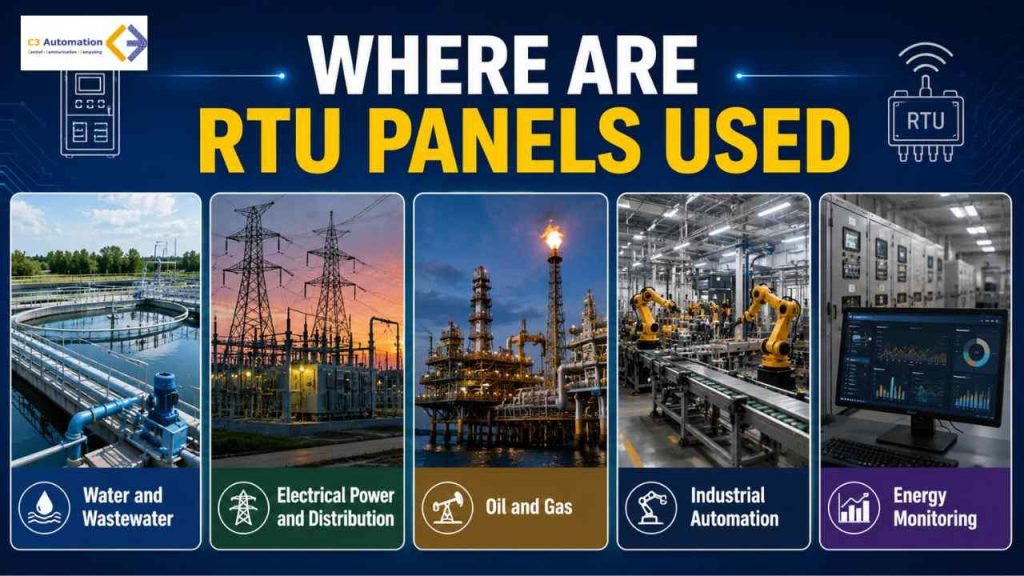
RTU panels are utilized when infrastructure or industrial assets need to be controlled or monitored from a remote area. Common applications include wastewater and water electrical distribution, oil and gas infrastructure, energy monitoring along with industrial automation. RTU platforms are especially useful for assets distributed across the globe since they are able to collect local information and then transmit the information to a central system.
Water and Wastewater
The water and wastewater infrastructure may include reservoirs, pumping stations, treatment plants and flowmeters, pressure sensors, and remote valves. An RTU panel is able to collect data from these assets and transmit it to a central SCADA system. Operators are able to monitor the status of pumps and tank levels, flow, pressure and alarms without having to go to every site.
Electrical Power and Distribution
Electrical infrastructure typically consists of equipment that is distributed over substations and remote sites. RTU panels are able to monitor alarms, electrical measurements like voltage and current and other operational details as well as allowing communication with control centers. RTU technology is often used in remote monitoring and telecontrol in power distribution environments.
Oil and Gas
The oil and gas industry may involve remote wells, pipelines, pumping systems and processing equipment. RTU panels are able to collect data from field instruments and relay information to the central monitoring platform. Remote control features can assist with certain field operations if the appropriate safeguards and control algorithms are in place.
Industrial Automation
Manufacturing and process facilities could make use of RTU panels when equipment is distributed over large locations or when remote monitoring is required. They can be used to complement PLCs, SCADA systems, HMIs, gateways as well as industrial network equipment.
Energy Monitoring
Power-monitoring and energy meters often offer Modbus communication. An RTU panel will collect information like voltage and power, current, consumption, and other parameters, and then transfer that information to the supervisory platform. This is a reason why knowing Modbus RTU is essential when designing an RTU-based monitor system.
How to Select the Right RTU Panel
The decision to select an RTU panel should start with the software rather than the controller’s brand or model. Take note of the following aspects:
1. The type and quantity of I/O points
Calculate the necessary analog and digital inputs and outputs. Add spare capacity in case the future expansion is anticipated.
2. Communication needs
Determine if the system needs Modbus RTU, Modbus TCP, Ethernet cell, radio, fiber, DNP3, IEC protocols, or a different communication method.
3. Conditions of the environment
It is important to specify the enclosure and its components according to humidity, temperature dust, exposure to water as well as the installation and the location.
4. Power needs
Examine the voltage that is required and capacity for current the backup requirements, as well as the security strategy.
5. Compatibility with SCADA and control systems
The RTU should be able to reliably communicate with the planned or existing SCADA, PLC, DCS or cloud platforms.
6. Future expansion
A panel with no extra terminals, I/O, communications capacity or enclosure space could be costly and difficult to extend in the future.
7. Security and maintenance
Remote systems must be constructed with the appropriate access control for network segmentation, security configuration, authentication and maintenance processes. The connectivity to communications improves operational flexibility However, it is also a reason why secure system design is essential.
RTU Panel vs PLC Panel: Are They the Same?
RTU panels and PLC panels might look similar as they both contain I/O modules, controllers, relays, power supplies, terminals, communication interfaces. The distinction is mostly due to their intended purpose and the system’s architecture.
A PLC is typically used for local process or machine control and deterministic control systems that are fast. RTU is typically constructed with remote monitoring communications, telemetry, and assets distributed geographically in the mind.
However, modern controllers could make this distinction more blurred. Certain RTU platforms can be programmed to provide control functions, whereas PLCs are able to provide a wide range of communications and remote access capabilities. The best option is dependent on the particular application rather than simply picking an item by its name.
Final Checklist Before Installing an RTU Panel
Before the commissioning of the RTU panel, confirm:
- I/O points are in line with the design that has been approved
- Field wiring is properly connected
- The voltage of the power supply is correct
- The devices that protect you are properly installed
- Communication parameters match connected devices
- Modbus RTU addresses have been assigned correctly
- The RS-485 wire and terminations are acceptable
- Ethernet settings are set when appropriate
- SCADA tags correspond to correct field information
- Control logic and alarms have been test-driven
- Remote commands must be secured by the appropriate interlock.
- Panel labels and drawings are also available.
- Recovery and backup procedures are documented
- The settings for cyber security are properly adjusted
A thorough process of commissioning can help avoid many communications and control issues before the panel is able to enter normal operation.
Related Products
1. BMXNOM0200 – RS-485/Modbus communication
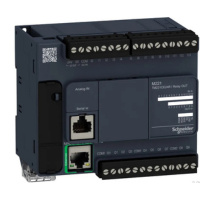
2. TM221CE24R – PLC/controller + I/O
3. BMXDDO1602 – Digital output module
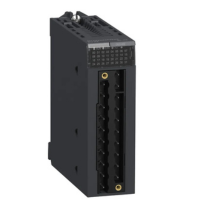
4. ABL8REM24050 – 24V DC power supply
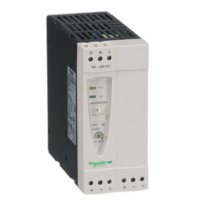
5. RM35TF30 – Protection/control relay
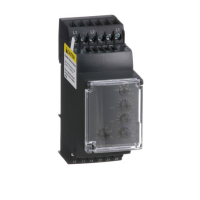
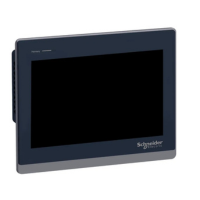
6. HMIST6500 – HMI/local monitoring
Conclusion
RTU panel is a vital component in modern industrial and remote control systems. It is a standardized platform to house it’s Remote Terminal Unit, I/O modules, power supplies, communications interfaces, security devices, terminals as well as other parts required to connect field equipment to the central supervision system. By capturing field data and transmitting the information to SCADA and/or another management system, RTU panel can help operators manage distributed assets more effectively and adapt to operational conditions remotely.
Understanding the functions of an RTU panel also implies understanding the purpose of communication. Modbus RTU is among the most widely used industrial communication techniques to connect RTUs with drives, meters I/O module controllers and various other field devices. When Ethernet-based communications are needed, gateways are able to connect Modbus RTU networks and Modbus TCP-based systems. This is making it possible for existing serial equipment to function with the latest Industrial Ethernet architectures.
A well-engineered panel will offer high-quality access to data, remote controller diagnostics, and communications across challenging industrial environments. The application may involve electricity distribution, water treatment, monitoring of energy, oil and gas as well as industrial automation; choosing the correct RTU architecture is vital to developing a reliable remote-control system. By looking at the seven main areas discussed in this guide engineers and system integrators will be able to make better informed choices when deciding on the RTU control panel to be used in their next automation projects.
FAQ
1. What is the purpose of RTU panel?
The primary function is to gather information from field devices and transfer information to a central control system such as SCADA. It also be able to receive instructions from the control system and also operate connected equipment.
2. Is RTU panel identical to Modbus RTU?
No. RTU panel is an electronic control and communications enclosure. Modbus RTU is an electronic communication protocol that allows you to transfer information between devices that are compatible.
3. What is the possibility of having an RTU panel be used for Ethernet communications?
Based on the RTU and the system’s design, Ethernet can be used to communicate with SCADA systems, PLCs, gateways, industrial switches as well as other networked devices.
4. Does an RTU panel remotely control equipment?
Yes. If the system is specifically designed to control the RTU remotely, it can be able to receive commands from a supervisory device and transmit relevant output signal signals to devices such as motors, pumps, valves, switches.
5. What are the reasons RTU panels so important for industrial automation?
RTU panels let operators supervise and manage equipment at remote or geographically separated locations. They enhance visibility, minimize the need for manual intervention and connect field equipment to central SCADA and supervisory systems.