Modern industrial automation is dependent on a reliable connection among PLCs, sensors, HMIs as well as meters, drives and various other field devices. Modbus is an extremely frequently utilized method of communication due to its easy structure, broad compatibility with devices, and its ability to function across both serial and Ethernet networks. It was originally designed for industrial control, Modbus has continued to accommodate both older equipment and advanced automation technologies. Modbus is implemented via serial communication like RS-485 as well as over Ethernet by using Modbus TCP. This guide will explain the basics of what Modbus is and how Modbus communication is implemented, the major kinds that are available for the Modbus protocol, the various applications, advantages, and limitations and the importance that gateways play in the modern automation system.
What Is Modbus?
Modbus can be described as an industrial communication protocol that is used to transfer information between electronic devices used in control and automation systems. Modbus was first created by Modicon in 1979 to support industrial control applications. It has since evolved into a popular method of communication between different devices.
One of the major factors behind the appeal for Modbus is its simple communication model. Instead of requiring a specific protocol for each brand, Modbus provides a common messaging framework that all devices are able to comprehend. Modbus-enabled systems can comprise devices like:
- Programmable Logic Controllers (PLCs)
- Human Machine Interfaces (HMIs)
- Remote I/O modules
- Variable Frequency Drives (VFDs)
- Energy meters
- Control of temperature
- Sensors and transmitters
- Motor controllers
- Industrial computers
- SCADA systems
- Building automation equipment
These specifications work primarily on the application layer and specify how devices organize requests and respond. It is able to operate on a variety of communicating networks, including serial connections as well as Ethernet TCP/IP networks.
How does Modbus work?
In its simplest form, Modbus follows a request-and-response communication model. A device that acts as the client requests a different device that acts as a server. The server processes the request and transmits the requested details or executes a procedure.
As an example, imagine a PLC linked with an energy meter. The PLC might need to know the voltage reading of the meter. The process of communication may look like:
PLC – Request – Energy Meter – Response – PLC
The request is able to identify the device that is targeted, explains the operation and gives the required information or data for registers. The energy meter will then respond by providing the value you requested. Similar processes can be used to record information. For instance, the controller could issue an instruction to alter the set point stored on an appropriate device.
In the past, Modbus networks commonly referred to the devices that communicated as slaves and masters. Modern Modbus terminology employs the terms server and client to describe the relationship between request and response. Modbus Organization has revised its terms of reference accordingly.
What information can Modbus transfer?
Modbus is a protocol designed to transfer various types of information from industrial applications. Common data fields include:
- Coils are single-bit outputs that can be written or read
- Single-bit inputs with discrete input statuses
- Input registers – read-only values for registers
- Registers for holding – which can be written and read
The protocol employs function codes to define what actions should be executed. Examples include reading coils or reading inputs that are discrete, holding registers for reading, input registers, and writing one or multiple numbers.
For instance for example, for instance, a PLC could access a holding register that holds the temperature that is measured from an industrial control. It can add a brand new operational number into a holding register if the device can support this operation. This standardization allows automation equipment from various manufacturers to share process information.
Why is Modbus still relevant in 2026?
Industries typically contain a combination of new and old technology. Removing all devices because it has an older method of communication can be costly and can cause disruption. Modbus is a convenient method of allowing existing equipment that is compatible as well as integrate it in modern automation technology.
The large number of devices it has installed is a further advantage. Its large installed base is another advantage. Modbus Organization describes it as an extensively used industrial protocol used by a variety of manufacturers and types of devices. Therefore, Modbus remains relevant in applications where interoperability, simple data exchange and the integration of current equipment are essential.
What Is Modbus Communication?
Modbus communication can be described as a way of exchanging data between industrial devices via a Modbus protocol. It permits equipment like PLCs, energy meters, VFDs, sensors, remote I/O modules, SCADA systems, and HMIs to communicate with one another to monitor and control.
Modbus communication is available in a variety of implementations based on the kind of network and the equipment. The most popular are Modbus RTU, which is commonly used on serial networks like RS-485, as well as Modbus TCP, which runs on Ethernet networks. Modbus ASCII is yet another serial transmission method, but it isn’t as commonly utilized in modern systems.
- Modbus RTU is a serial communication protocol that is commonly employed with RS-485 networks to connect devices like PLCs, meters, drives as well as remote input and output.
- Modbus TCP: is an Ethernet-based variant of Modbus that utilizes TCP/IP. It is widely utilized in modern industrial networks.
- Modbus ASCII is a serial transmission format that encodes Modbus messages with ASCII characters. It is not as frequently utilized as RTU in industrial applications of today.
What is a Modbus gateway?

A Modbus gateway allows various Modbus implementations and network types to connect. For instance, an old energy meter can communicate with Modbus RTU via RS-485 and a modern SCADA system could communicate using Modbus TCP via Ethernet. A gateway is able to bridge these two worlds. The path of communication could appear like:
Modbus RTU Device – RS-485 – Modbus Gateway – Ethernet – Modbus TCP Client
This strategy can allow organizations to make use of existing equipment and not replace each serial device. C3 Automation offers Modbus RTU to Modbus TCP gateways to connect serial-based Modbus RTU/ASCII devices to Ethernet-based Modbus TCP systems. These gateways are able to connect old PLCs meters, I/O equipment as well as other equipment with modern-day automation systems.
What Are the Applications and Benefits of Modbus in Industrial Automation?
Modbus is utilized in an array of infrastructure and industrial applications. Its capability to exchange data between various types of equipment makes it ideal for monitoring, controlling, data collection, and system integration.
Modbus applications
1. PLC communication
PLCs are able to use Modbus to connect with remote I/O meters, drives, controllers, as well as other equipment in the industrial sector. The information gathered can be used to implement control algorithms and monitoring, alarms or even for reporting.
2. SCADA systems
SCADA platforms often communicate with field equipment to gather operational information. The Modbus-enabled SCADA system will retrieve information from PLCs, meters, remote devices, and controllers and present it to the operator. Operators are able to observe these values via the central interface.
3. Energy monitoring
Energy meters are commonly used Modbus devices. They can display numbers like: Voltage or current, Frequency power, Energy consumption and many more. The PLC, SCADA system, building management system or industrial computer is able to access these values via Modbus. This is what makes Modbus an ideal tool for monitoring energy and power management projects.
4. Variable Frequency Drives
VFDs are able to use Modbus communication to exchange operational data in conjunction with PLCs along with other controllers. They may also be capable of writing command or establishing points. This may reduce the requirement for multiple hardwired signals to perform certain monitoring or control functions.
5. Remote I/O
Modbus-compatible remote I/O modules permit the output and input signals gathered in a variety of locations. Instead of transmitting each sensor’s signal back to a centralized control panel, remote I/O can gather field signals and then exchange the data digitally with the help of a PLC or controller. This is a great option for large installations that have equipment spread out over different regions.
6. Automation of buildings
Modbus is also utilized in addition to traditional factory automation. Building management systems can utilize Modbus to connect with other equipment such as HVAC control systems, Energy meters, and various electrical monitoring equipment. The Modbus Organization states that the protocol can be used across building, industrial infrastructure, transportation and energy-related applications.
7. Systems for wastewater and water
The wastewater and water treatment facilities typically contain pumps, meters, sensors, valves along with control systems. Modbus communication is an easy method of collecting information for these machines. Gateways can also be used to link remote device serial to controllers that are based on Ethernet. C3 Automation identifies water and wastewater monitoring pump systems, distributed remote stations and infrastructure projects as possible possibilities for the Modbus RTU-to-TCP gateway solutions.
8. Industrial IoT
Modbus could also be the basis of an Industrial IoT architecture. Numerous existing industrial equipment and sensors already supply Modbus information. Gateways or other industrial devices could gather that data and provide it to systems that are higher-level. For instance:
Sensor – Modbus RTU – Gateway – Ethernet – Industrial IoT Platform
This allows companies to collect useful data from existing equipment, without needing to replace the equipment in use.
The key benefits of Modbus
1. Simplicity
Modbus is a fairly simple communication system. This makes it simpler for technicians and engineers to comprehend, configure and troubleshoot when compared with more complex industrial communication technology.
2. Interoperability
One of the major benefits that comes with Modbus is its widespread adoption across various manufacturers. Devices that are compatible with different manufacturers can be connected if they have the same Modbus functions as well as address formats for data and communication parameters. This makes Modbus beneficial for multi-vendor automation systems.
3. Large device ecosystem
Since Modbus is used for many years, numerous industrial devices use Modbus. This gives engineers a variety of options to choose from, including meters and drives, PLCs, gateways, controllers and other I/O devices.
4. Cost-effective Integration
Modbus can assist organizations in integrating equipment without having to create a exclusive communication infrastructure. Gateways, in particular, can let older serial equipment communicate with the latest Ethernet systems, possibly extending the lifespan of current equipment. The gateways offered by C3 Automation specifically designed for this kind of conversion.
5. Flexible deployment
Modbus operates across Ethernet and serial-based environments. This provides engineers with flexibility in designing systems that use the combination of old and contemporary equipment.
How to Choose and Implement Modbus for a Modern Industrial Automation System
The decision to choose a Modbus solution involves more than simply determining whether your device is compatible with the protocol. Engineers must consider the interface for communication and the design of the network, compatibility with devices with data requirements, distance performance, and the possibility of future expansion.
Step 1: Determine the devices
Begin by identifying every device that is required to communicate. Review the documentation of each manufacturer to identify the Modbus implementation is compatible. The device could be able to support Modbus RTU, Modbus TCP or both.
Step 2: Examine the physical interface
To use Serial Modbus communication, check if the device supports RS-485 or the RS-232 or another compatible interface. To use Modbus TCP make sure you verify for the Ethernet connection and the network specifications. Don’t think that two devices are able to communicate just because they are listed by the term “Modbus compatibile.” The details of their implementation must be compatible.
Step 3: Verify communication parameters
For Modbus RTU, the most common parameters are:
- Address of the device
- Baud rate
- Data bits
- Parity
- Stop Bits
All connected devices should be set up correctly. Incorrect serial settings are the most common cause of communications failures.
Step 4: Review the register mapping
A very critical aspects that is essential to Modbus integration is comprehending the device’s register mapping. The documentation of the manufacturer should state:
- Addresses to register
- Types of data
- Permissions to write or read
- Scaling
- Units
- Function codes
For example, a temperature value might be stored in a holding register as an integer representing tenths of a degree. If the PLC does read the register but interprets it incorrectly the temperature that is displayed may be incorrect, even though communication itself is functioning.
Step 5: Choose the correct function codes
Function codes specify what action the Modbus client requests. Common function codes are:
01 – Read Coils
02 – Read Discrete Inputs
03 – Read Holding Registers
04 – Read Input Registers
05 – Write Single Coil
06 – Write Single Register
15 – Write Multiple Coils
16 – Write Multiple Registers
The specific functions that are supported depend on the particular device. The Modbus specification specifies the function-code framework utilized for Modbus transactions.
Step 6: Determine whether an access point is needed
The use of gateways is especially important when devices are connected to multiple communication systems. C3 Automation’s Modbus RTU to Modbus TCP gateways were designed to support this kind of protocol conversion and facilitate the integration of serial devices with Ethernet-based systems.
Step 7: Consider network diagnostics
Reliable communication is essential in industrial automation. If Modbus communication is not working, engineers might be required to determine if the issue is due to:
- Incorrect device addressing
- Incorrect baud rate
- Wiring issues
- Network configuration
- Address of the registration
- Function codes that are not supported
- Gateway configuration
- Ethernet connectivity
- Device failures
- Network diagnostic tools can assist find communication issues.
C3 Automation also lists a network diagnostic agent, GDAJY-003037 to monitor and diagnose networks, including Modbus TCP and PROFINET EtherNet/IP and the standard Ethernet TCP/IP.
Step 8: Make plans for expansion in the future.
A Modbus network shouldn’t just meet the requirements of today. Engineers must consider the future of equipment and expansion of the system. Before choosing the gateway or device for communication, think about:
- Connected devices number
- Serial ports number
- Ethernet port specifications
- Expected data traffic
- Network topology
- Conditions in the environment
- Requirements for mounting
- Remote configuration requirements
- Diagnostic capabilities
- Security features
C3 Automation’s Modbus gateways offer options that include several ports, DIN rail mounting, web-based configuration diagnostics, and industrial operation capabilities, dependent on the model.
Modbus security concerns
The traditional Modbus was developed primarily for simple industrial communications rather than the latest cybersecurity needs. As industrial networks get more connected, security must be taken into consideration when deploying Modbus-based systems. Access control, segmentation of networks firewall rules secure remote access and a proper monitoring will aid in reducing unnecessary risk.
The Modbus Organization has also released the Modbus Security Protocol that integrates Modbus connectivity along with Transport Layer Security (TLS) and utilizes X.509v3 certificates to authenticate. The protocol uses TCP Port 802. This doesn’t mean that each existing Modbus installation should be upgraded. Security requirements must be evaluated in relation to the network’s architecture as well as the risks profile, connectivity and the capabilities of the equipment.
Modbus troubleshooting checklist
If the Modbus system isn’t communicating properly, engineers can follow a well-defined troubleshooting procedure:
1. Verify power: Confirm that all devices connected and gateways are correctly powered.
2. Check wiring: For networks using RS-485, check the wiring used for communication, its connections, polarity, shielding, and termination requirements.
3. Check device addresses:Make sure that the device’s address is the same as that sought.
4. Make sure you are aware of the serial parameters
Verify the baud rate and stop bits, parity along with data bits.
5. Addresses for check registers:
Check whether the PLC, SCADA system, or program is using correct register data.
6. Verify the function codes:
Verify that the requested function is available on the device that you want to use.
7. Verify Ethernet settings:
To use Modbus TCP, confirm the IP addresses, subnet configuration, connectivity, as well as the TCP port specifications.
8. Check gateway configuration:
If you are using a protocol converter employed, check whether it is using serial or Ethernet parameters, as along with routing and mapping settings.
9. Monitor communications:
Utilize suitable diagnostic instruments to establish if requests are being sent and whether responses are received. A methodical approach can dramatically speed up troubleshooting and determine if the problem is rooted in the wiring, the device, the gateway, configuration, or at the network or network.
Why Modbus remains a practical choice for industrial automation?
The industrial automation industry is moving towards Ethernet, Industrial IoT, remote monitoring, and more connected systems. However, this doesn’t remove the need for traditional industrial communications protocols. In fact, modern systems typically mix different technologies.
A brand-new industrial facility may make use of Ethernet-based communication as a control network, while integrating the existing Modbus RTU meters, drives and controllers as well as sensors. Gateways and the conversion of protocols become important. Instead of seeing Modbus as a technology that is outdated that needs to be eliminated from the market, engineers can think of Modbus as a component of an overall automation structure.
The Modbus Organization is still maintaining specifications and resources for the implementation of Modbus applications, such as serial communication as well as Modbus TCP/IP. If you are a company that is planning to upgrade your automation system to 2026 in the near future, the most efficient method is usually to choose the appropriate communication technology based on the specifications of the application and then use suitable gateways for different networks that need to collaborate.
Related Products
1. GDA-JY-003037 – Network Diagnostic Agent for PROFINET, EtherNet/IP, Modbus TCP

2. LRA-JY-003041 – Mobile Diagnostic Software for PROFINET, EtherNet/IP & Modbus TCP

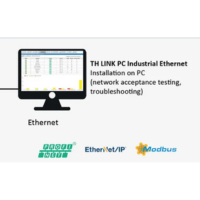
3. LRA-JY-003028 – TH LINK PC Industrial Ethernet Diagnostic Software
4. BMENOC0301 – 3 port Modicon m580 Communication Module

Conclusion
Modbus is a reliable and widely used communication protocol for industrial automation by 2026. It permits the use of PLCs and energy meters HMIs, VFDs, remote I/O modules and SCADA devices to share information effectively. Knowing Modbus communication allows engineers to select the best solution to meet different requirements for automation. If current devices require to connect to the latest Ethernet networks, it can make the connection easy and reliable. The correct configuration and mapping of registers, diagnostics for networks as well as security are essential to ensure the operation is reliable. C3 Automation offers industrial communication and diagnostic tools that be used to support Modbus TCP networks as well as integration requirements. When you choose the best Modbus gateways, devices, as well as diagnostic instruments, companies can develop solid, flexible, and adaptable industrial automation systems.
FAQ
1. What exactly is the Modbus protocol do?
This protocol is utilized to control and monitor the exchange of process information between industrial automation equipment.
2. Is Modbus safe?
The traditional Modbus did not have the latest security as its main goal. Access controls, network segmentation monitoring, and other appropriate security tools should be taken into consideration.
3. What exactly is a Modbus gateway?
A Modbus gateway connects to networks or devices with different Modbus communication protocols, including Modbus RTU as well as Modbus TCP.
4. What devices utilize Modbus?
Energy meters, VFD sensors, remote I/O controllers, HMIs, and SCADA systems can be used to support Modbus communication.
5. Are Modbus still in use in 2026?
Yes. Modbus is still widely used because of its wide device support, easy communication architecture, and compatibility with current industrial equipment.