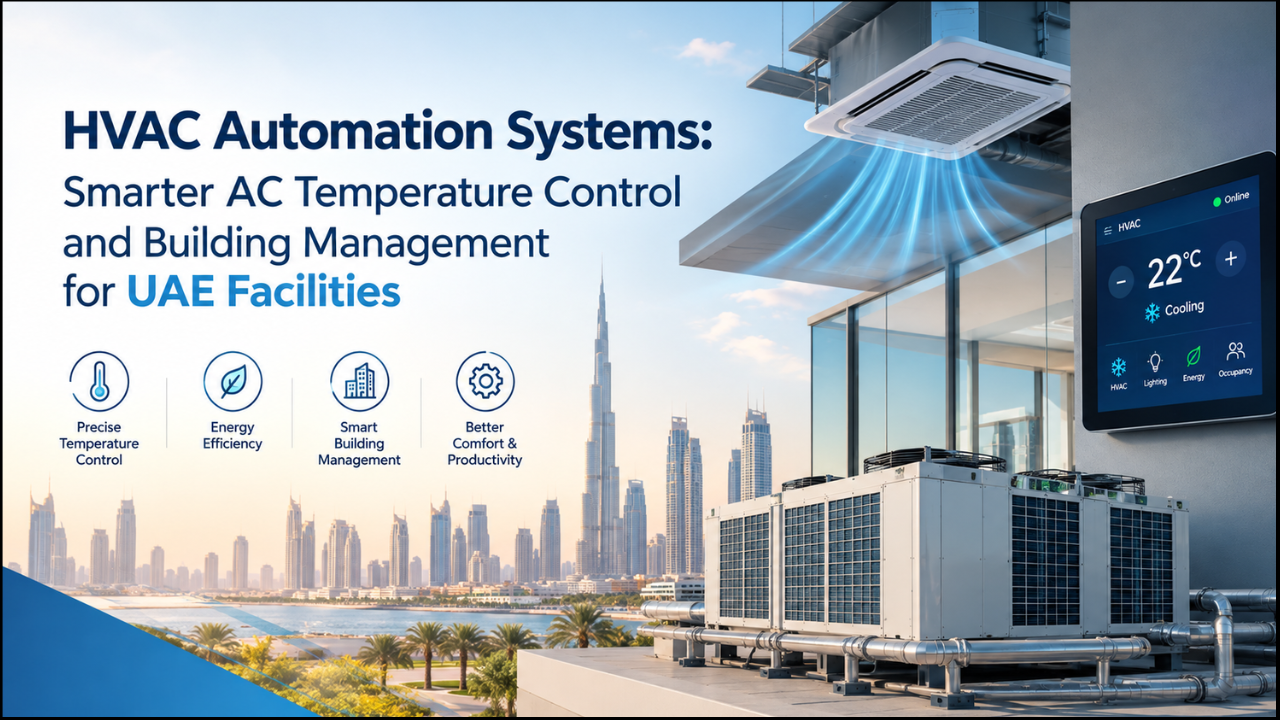
Keeping a building efficient and working well in the UAE weather is not an easy job. Old thermostats and set times can’t handle changing people in the space outside heat and machines running. That is why more factories and offices are using HVAC automation systems to handle everything from cooling temperature control to complete building climate plans.
What Are HVAC Automation Systems?
An HVAC automation system uses sensors, controllers and software to watch and change heating, ventilation and air conditioning by itself of a person turning a dial.
This is called AC automation. AC automation is the use of automation rules, to cooling machines so that temperature, airflow and humidity are controlled all the time and very accurately without a person having to keep checking.
At its core, a HVAC control system ties together:
- Temperature, humidity, and occupancy sensors
- PLCs or dedicated controllers that process sensor data
- Actuators and dampers that adjust airflow and cooling output
- A central interface for scheduling, monitoring, and overrides
AC Temperature Control : Why Precision Matters
Reliable AC temperature control is about more than feeling comfortable. In places like server rooms, cleanrooms, cold storage areas and production floors where the environment needs to be controlled, even tiny changes in temperature can damage equipment or lower the quality of products. An automated heating, ventilation and air conditioning system keeps the conditions steady. Responds right away to any changes. This is something that manual adjustments cannot always do in a big building, with many different areas.
Building Management System (BMS)
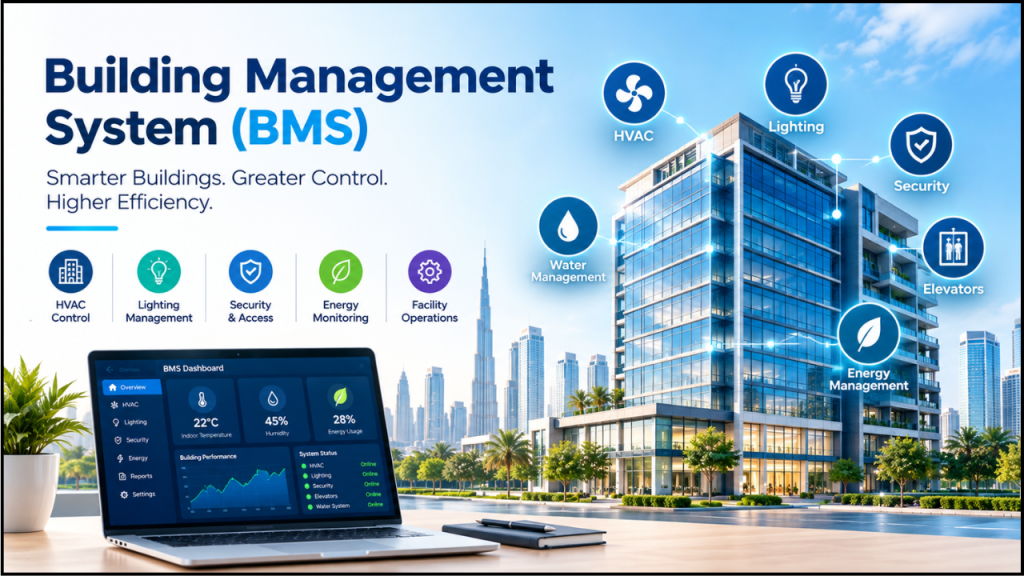
While an HVAC control system focuses on climate, a building management system or BMS expands automation to the whole building—lighting, security, fire systems and HVAC all run from a single platform. A BMS gives facility managers one dashboard to watch conditions zone by zone, spot equipment problems and change settings, for people or after‑hours schedules without having to walk the floor. For UAE facilities that handle cooling loads most of the year, putting AC automation inside a larger BMS is one of the best ways to cut energy costs while keeping the environment steady.
Benefits of an Automated HVAC System
- Lower energy use — output adjusts to real demand instead of running at fixed capacity
- Extended equipment life — automation avoids the on/off cycling and overcorrection that strains compressors and fans
- Fewer breakdowns — centralized monitoring flags issues before they cause a shutdown
- Consistent comfort and process conditions across every zone
- Less dependency on manual adjustment, reducing human error
HVAC Service and Ongoing Reliability
Automation cuts down on work but it does not get rid of the need for regular HVAC service. Sensors still need to be calibrated. Controllers still need firmware updates and configuration checks. Networking parts must stay in shape so that the system can keep talking to each other reliably. A well‑maintained automated HVAC system keeps working the same each year. A neglected automated HVAC system loses accuracy, over time no matter how smart the original design was.
The Components Behind a Reliable Automated HVAC System
The HVAC control system or BMS is only as reliable as the hardware that runs underneath it. PLCs, sensors, networking cables and communication interfaces keep every component talking to the platform. Genuine and compatible parts matter much here as they do in any other industrial control system.
- Industrial Automation modules
- Ethernet and networking cabling, for connecting sensors and controllers
- Low‑voltage protection and switching components
- Industrial communication and connectivity devices
Conclusion
Most facilities do not need to automate everything at once. Most facilities can start by identifying the zones where energy costs highest or tolerance is tightest then expand sensor coverage and control logic from there and finally integrate into a full building automation system.
UAE teams in need of HVAC automation or BMS upgrade often face difficulties sourcing the components. C3 Automations online shop offers a catalog, by brand and category and technical support is available to help confirm the right components before ordering. UAE teams can rely on C3 Automations shop, catalog, brand and category selection while technical support confirms the right components before ordering.
FAQ
1. What is an HVAC automation system?
An heating ventilation and air conditioning (HVAC) automation system uses sensors, controllers and software to watch over and change heating, ventilation and air conditioning automatically. It manages temperature, humidity and airflow in time without any need for people to do it manually.
2. What’s the difference between HVAC automation and a building management system (BMS)?
HVAC automation is dedicated to climate control equipment. A BMS is broader. It coordinates HVAC with lighting, security and fire systems from one platform giving facility managers centralized control over the whole building.
3. How does AC automation improve energy efficiency?
AC automation changes cooling output based on real‑time demand such as how many people are in the building, the outdoor temperature and the specific needs of each zone. It does not run at a fixed capacity all the time. AC automation cuts energy use, which matters a lot in the UAEs high cooling‑load climate.
4. Is HVAC automation only useful for large commercial buildings?
No. While large facilities see the biggest efficiency gains, smaller commercial spaces and industrial units with climate- processes such as server rooms, cold storage and production areas also benefit from more precise AC temperature control.
5. Does an automated HVAC system still need regular servicing?
I see that automation cuts down on tweaking but sensors still need calibration controllers still need firmware checks and networking components still need maintenance. Regular HVAC service keeps the system accurate. A neglected system loses precision, over time with advanced automation in place.
6. Can an existing HVAC control system be automated, or does it require a full replacement?
Most facilities do not need a replacement. Automation can often be added step by step. By installing sensors and controllers in the areas that cost the most or require the tightest tolerances and then, by adding more until the entire building management system is fully integrated.
7. What components are needed to build a reliable HVAC automation setup?
A reliable setup depends on PLCs and controllers, temperature, humidity and occupancy sensors, actuators and networking hardware. These elements—PLCs, controllers, sensors, actuators and networking hardware—must all stay connected to the control platform. Using compatible parts is essential, for accuracy and long‑term reliability.
8. Where can I source components for HVAC automation in the UAE?
Suppliers such as C3 Automation have control modules, networking cabling and connectivity devices that are used in HVAC systems and building automation projects. They also offer support to make sure everything works together before you place an order. These suppliers help you check if the parts are compatible before you buy them.