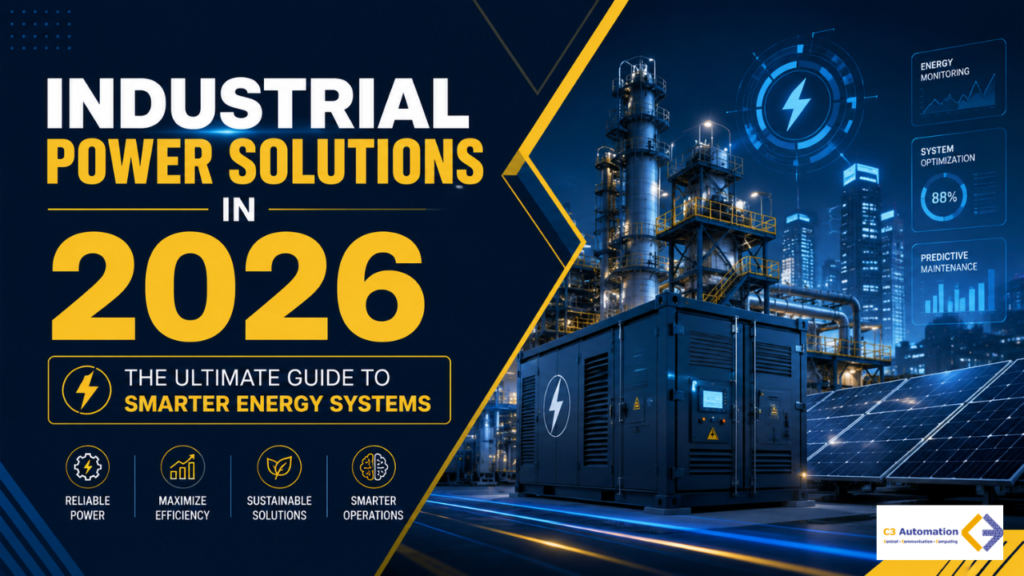
Power is no longer simply a utility in today’s industrial field. It is a strategic asset that has a direct impact on all those happening in industries whether it be- productivity or efficiency or even if it is profitability. Different industries like manufacturing, oil and gas, construction and infrastructure all need stable, smart energy systems to run without interruption. This mounting dependency has made industrial power solutions a critical piece of modern industrial ecosystems.
As we head into 2026, power systems have undergone major shifts in their demands. Businesses are no longer looking for basic electrical setups; they want smarter energy systems that has many features with real time data. Some of these include- monitoring performance, predict failures and optimize energy consumption. With the evolution of different areas- automation, artificial intelligence, IoT technologies etc these industrial power solutions are becoming highly developed, interconnected and also data-driven.
At the same time, power solution industries are supposed to reduce energy cost alongwith meeting environmental regulations to improve operational efficiency. This has led to a rapid adoption of new technologies that improve reliability and subsequently reduce waste. In this blog we covers everything you need to know about industrial power solutions in 2026, including their role, components, benefits, applications, challenges, and future trends.
Industrial Power Solutions in 2026: Role in Modern Power Solution Industries
Industrial power solutions have become the backbone of modern industries. Their role extends well beyond providing electricity to facilitate intelligent decision-making, automation and operational efficiency by 2026. In the power solution industry, a steady power supply is essential. Any brief interruption can lead to production delays, financial loss and safety hazards. That’s why industries are investing in sophisticated systems to maintain reliability and stability.
Automation is one of the most important features of industrial power solutions. Industries uses different technologies like- Programmable Logic Controller or simply PLCs, SCADA systems and intelligent control panels. These technologies help to automate processes and reduce human intervention. And thus improves both accuracy and productivity at the same time. Real time monitoring is another important thing. Today’s systems constantly report back on power usage, equipment operation and system health. This allows industries to identify inefficiencies and respond quickly to correct them.
Also integration is a big thing. Today industrial power systems are integrated with other digital technologies to create an ecosystem where machines communicate and collaborate. This will lead to better coordination and overall efficiency. Industrial power solutions also enable industries to meet their sustainability goals. They use energy efficiently and add renewable sources to lessen the impact on the environment and to be a part of green initiatives. In conclusion, for the efficiency, reliability and sustainability of the industries of modern power solution, industrial power solutions are a necessity.
Key Components of Industrial Power Solutions for Smarter Energy Systems
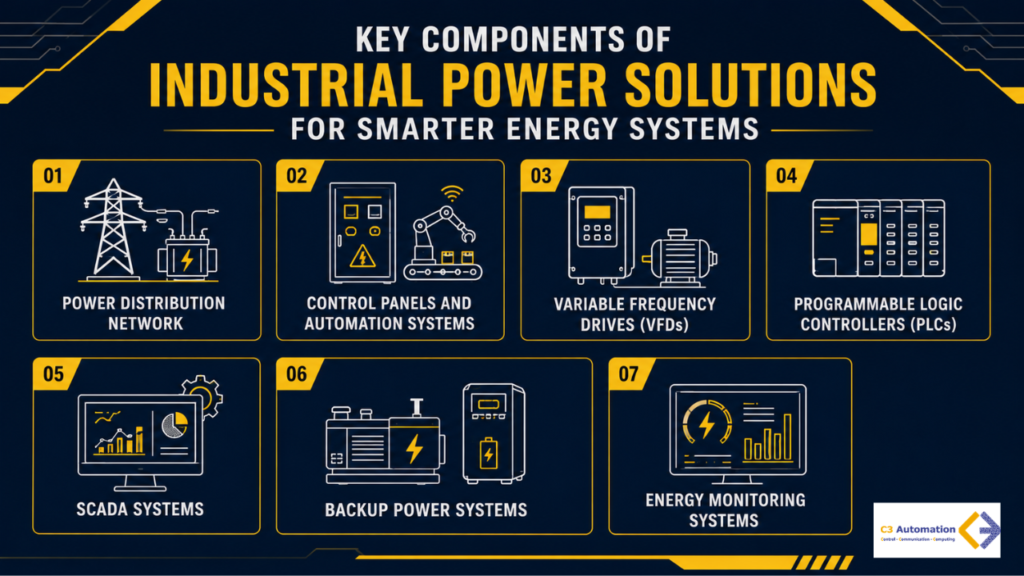
It is important to understand the core components that make up industrial power solutions to build an efficient and reliable energy system. Each piece serves a different function in managing, distributing and optimizing power in an industrial environment. When these elements work together, they form a cohesive system that enhances performance, minimizes downtime and ensures long-term operational stability.
1. Power Distribution Network
Power distribution systems are used to deliver power from the main source to various machines and equipment in a facility. In a well designed system, power is evenly distributed (with zero losses). The modern distribution systems are equipped with smart sensors and protection devices to detect the overloads and faults instantly. This helps to prevent equipment damage and to ensure smooth operation. Efficient distribution is the foundation of reliable industrial power.
2. Control Panels and Automation Systems
Industrial power systems rely on electrical control panels as their central command unit, housing the electrical components that govern system operations. Together with automation systems they enable industries to control processes with minimal human involvement. They are more accurate, less errorprone, more productive. Advanced panels also feature monitoring systems that provide real-time data on system performance. This helps to identify problems and to take fast action.
3. Variable Frequency Drives (VFDs)
Variable Frequency Drives or VFDs control the speed of electric motors based on actual operating requirements. VFDs are designed to optimize performance based on demand, not run motors full speed all the time. This greatly reduces energy consumption and operating costs.” They also cut down on wear and tear on equipment and make it last longer. VFDs and VFD Control panels are particularly useful in industries where motors are used extensively.
4. Programmable Logic Controllers (PLCs)
PLCs are critical in automating industrial processes and maintaining consistent performance. They work on pre-programmed instructions . They can do complex operations with great precision . PLCs are quite reliable and are designed to work in harsh industrial environments. They reduce the amount of manual control required and increase the overall efficiency. PLCs allow industries to speed up and improve the accuracy of production processes.
5. SCADA Systems
SCADA systems provide a centralized platform to monitor and control industrial operations. They gather live data from a variety of devices and present it in an easy to understand format. This enables operators to monitor performance, helps in detecting problems, thus making informed decisions quickly. In addition, SCADA systems allow for remote monitoring, which is very useful for large industries. They are vital for enhancing efficiency and thereby minimizing downtime.
6. Backup Power Systems
Generators and UPS units are backup power systems that will keep operations running during a power failure. When the main power supply goes out, these systems automatically ensure performance does not stop. They also protect sensitive equipment from abrupt outages. Backup systems are an integral part of any industrial power solution.
7. Energy Monitoring Systems
Energy monitoring systems give you detailed information about how much power is used in various parts of a building. They help industries understand where energy is used correctly and give information like where they can improve. With all these real-time data, businesses can optimize energy use and also helps in eliminating waste. They also support sustainability objectives through improved overall efficiency. They are becoming more important in the modern industrial set-ups as sustainability promotes renewable future.
Benefits of Industrial Power Solutions Across Power Solution Industries
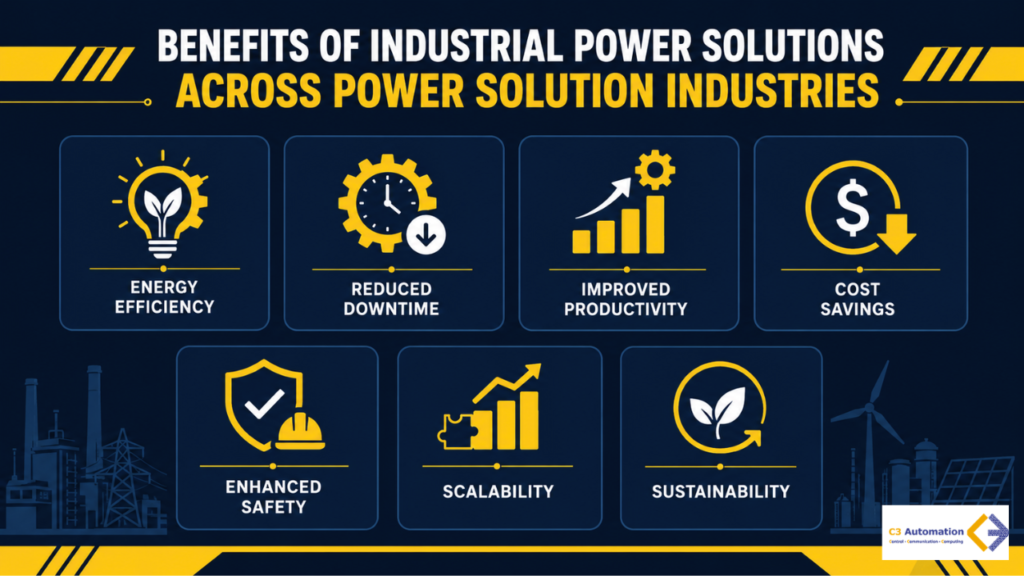
Industrial power solutions are not all about power, they are about improving your business performance. These systems have become vital in modern power solution industries to optimize energy usage, reduce operational risks, and support the long-term growth. Smart technologies and automation will make businesses operate in a more efficient, reliable and cost effective way.” Here are the key benefits that make industrial power solutions a critical investment for industries in 2026.
1. Energy Efficiency
Industrial power solutions are designed to make the use of energy in different operations easier. Industries can cut down unnecessary power consumption and reduce energy wastage with smart controls and sophisticated monitoring systems. This results in lower electricity bills and better utilization of resources. As time goes by, increasing efficiency will make the operation more sustainable and friendlier to the environment.
2. Reduced Downtime
Unplanned downtime can lead to significant production loss and disruption to business continuity. Industrial power solutions use features like- real-time monitoring, predictive maintenance etc to detect potential problems at the earliest before they turn into major failures. So if we are able to take action before any problems arise, operations can run more smoothly. This reduces any kind of unexpected system failures. These lead to maintain a constant rate in productivity, so the industries can avoid costly downtimes.
3. Improved Productivity
Automation is considered as a major factor in increasing productivity. Industrial power solutions connect systems such as PLCs and SCADA, then optimizing operations, thereby reducing the need for any human intervention. This enables processes to run faster in a more accurate form. Automated systems take care of the repetitive operations, freeing up employees for more valuable work and boosting overall efficiency.
4. Cost Savings
Long term cost savings is one of the greatest advantages of industrial power solutions. This can be achieved by-
- Reducing energy consumption
- Cutting maintenance needs
- Avoiding downtime
Even if the initial investment is high, if we get long-term savings as well as achieve improved performance make it worthwhile.
5. Enhanced Safety
Safety is a big concern in industrial environments and advanced power systems are designed to consider that. Overload protection, fault detection and automatic shut-off are all included in industrial power solutions. They minimize the possibility of any electrical accidents and provide a safe working atmosphere to the employees.
6. Scalability
Modern industrial power systems are designed such as they grow along with your business. So when the industry expands, these solutions can be easily upgraded or can be changed to accommodate new needs accordingly. This is scalability which means- businesses do not have to replace the entire systems when the operations grow. That is they are flexible and totally ready for future investment.
7. Sustainability
Industrial power solutions help industries to reduce their carbon footprint with increasing focus on the environmental responsibility. Such systems help in sustainable operation of the systems by optimizing the energy consumption and integrating renewable sources. This not only helps the environment but also improves the company’s reputation and ensures compliance with regulations.
Applications of Industrial Power Solutions
Industrial power solutions are widely used in various industries. These systems provide automation, helps in minimizing downtime, and also enable safe power distribution in critical environments.
1. Manufacturing Industry
Industrial power solutions are essential to running production lines, automating machinery and maintaining steady workflows for peak output efficiency in manufacturing plants.
2. Oil and gas Industry
These systems are used in oil and gas operations to provide dependable power for drilling equipment, refining processes, and operations at remote locations where reliability is a must.
3. Water Purification Plants
The water supply is safe and steady and the pumps, filtration systems, and treatment units are powered by industrial power solutions.
4. Construction & Infrastructure
These systems are used on construction sites in large scale to efficiently power heavy machinery, tools and site operations under demanding conditions.
5. Renewable Energy Sector
They allow the coupling of solar and wind energy sources to the industrial grids with the management of storage, distribution and conversion systems.
6. Data centres
Data centers need uninterrupted power systems to-
- Prevent downtime
- Safeguard servers
- Guarantee continuous data processing and storage.
Best Practices for Implementing Industrial Power Solutions
Industrial power solutions can only be successfully implemented through careful planning and execution. Industries can learn from the best practices and make the most of the benefits and avoid the pitfalls.
1. Perform Energy Audits – Before you put any system in place, it is important to analyze your current energy usage. This helps to spot inefficiencies providing opportunities for improvement.
2. Choose Scalable Solutions – Industries should invest in systems that can grow with them. Long-term value means scalable solutions.
3. Automation focus – Automation increases efficiency and decreases reliance on manual procedures.
4. Invest in education – Train staff in use and maintenance of advanced systems.
5. Ensure regular servicing – The key to keeping things running smoothly and avoiding surprises is regular maintenance.
6. Implement Security Measures – In connected environments, it is critical to defend systems from cyber threats.
Future Trends, Challenges, and Solutions in Industrial Power Solutions (2026 & Beyond)
Rapid innovation and advanced technologies are shaping the future of industrial power solutions. As we move into 2026 and beyond, industries are looking toward smart and connected systems to improve efficiency, as well as reliability alongwith sustainability. When it comes to technologies like IoT, it allows the industrial systems to be monitored and controlled remotely in real-time. AI improves performance by predictive analytics- which means using statistical modeling and machine learning and thereby promoting intelligent decision-making.
Simultaneously, renewable energy use diminishes reliance on conventional power sources, thus making industrial processes more environmentally sustainable. Smart grids are used by facilities to distribute power evenly and improve efficiency. Edge computing improves system performance by processing data closer to the source, reducing delays and making systems respond faster. Also, cybersecurity is also important that protects industrial systems from increasing digital threats.
However, despite these advancements, there are still several challenges in the implementation of industrial power solutions. High upfront capital costs are a significant deterrent to many sectors. Integration with existing legacy systems can also be time consuming and complicated. At the same time, the demand for a skilled workforce capable of operating sophisticated automation systems is increasing. As systems become more interconnected, cybersecurity risks continue to increase and ongoing maintenance requirements add to operational responsibilities.
These challenges can be effectively handled through- strategic planning, providing required workforce training as well as gradual system upgrades. Modern technologies and structured practices of maintenance can help industries to break through these barriers and fully realize the potential of industrial power solutions. Those organizations that can innovate and deal with these challenges will be better positioned to achieve long-term efficiency, reliability and growth.
Related Products
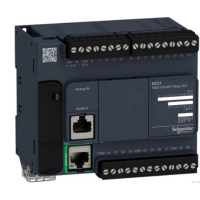
1. PLC (Core Control System) – TM221CE24R – Modicon M221 PLC
This is the brain of industrial power solutions, used to control machines and automation systems.
2. HMI Panel (Monitoring & Control Interface) – HMIST6600 Harmony ST6 HMI Panel
HMI panel helps monitor & control industrial power systems in real time with a user-friendly interface
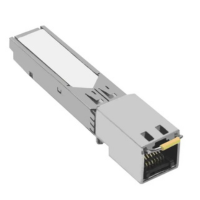
3. Industrial Communication Module – 490NAC0100 RJ45 Ethernet Cable for Modicon M580
Ensures smooth communication between automation systems, which is essential for modern industrial power solutions.

4. PLC Backup Battery (Power Reliability) – TSXPLP101 PLC RAM Backup Battery Pack
Maintains system data and supports reliable power operations in automation environments of Power solution industries
Conclusion
Industrial power solutions are a necessity, thanks to modern industries and it is the key priorities for 2026, efficiency and sustainability. Businesses must implement advanced systems to stay competitive and meet rising demand.
New technologies are being adopted by power solution industries for better energy management as well as operational efficiency. These innovations are mandatory where they not only help to reduce costs, but alos improve productivity along with promoting sustainability.
Investing in industrial power solutions is a way for businesses to achieve long-term success and thus remain ahead in this current competitive market. These systems deliver reliable power to enable smarter, more efficient operations.
In conclusion, industrial power solutions are changing industries by implementing smarter energy systems. Companies are adopting these technologies for a future that is capable of achieving sustainable growth.
FAQ
1. Why industrial power solutions matter?
They keep the wheels turning and expensive downtime away.
2. Do industrial power solutions cost a lot?
They cost money but pay for themselves in the long run.
3. What does smart grid mean?
It is a system that optimizes the management of electricity distribution.
4. What are power backup systems?
When the power goes off, they give power.
5. Do industrial power solutions work well with renewable power?
Yes, they help integrate solar and wind.