Industrial facilities are getting more connected all the time. Programmable Logic Controllers (PLCs) SCADA systems, Human-Machine Interfaces (HMIs) industrial Ethernet networks, sensors and Industrial IoT devices all work together to make things run better, help keep track of what’s happening and make operations smoother.. More connections also mean more chances for security problems.
OT Cyber Security has become very important for companies that use automation and control systems. OT Cyber Security is different from IT security. OT Cyber Security is about keeping operational technology environments, industrial networks, control systems and important infrastructure safe from online attacks. OT Cyber Security also makes sure that everything keeps working and without stopping.
What Is OT Cyber Security?
Operational Technology Cyber Security or OT Cyber Security, is about the tools, methods and security steps taken to keep industrial control systems and operational technology areas safe.
OT environments have equipment like:
- Programmable Logic Controllers (PLC’s)
- SCADA systems
- HMIs
- Industrial PCs
- Remote I/O systems
- Industrial Ethernet switches
- Sensors and actuators
- Industrial communication networks
- Industrial IoT devices
The main goal of operational technology cybersecurity is to keep systems secure from things like unauthorized access, bad software, network attacks, changes to data and other dangers that might stop production or harm industrial safety.
Why Is OT Cyber Security Important for Industrial Automation?
Modern industrial automation systems are increasingly connected to enterprise networks, cloud platforms, remote monitoring systems and Industrial IoT devices. This connectivity makes collecting and exchanging data easier, for industrial automation yet it also raises the attack surface. Industrial automation cybersecurity helps organizations protect automation infrastructure while keeping operations reliable.
A cybersecurity incident affecting a PLC, SCADA system, or industrial network could result in:
- Production downtime
- Unauthorized system access
- Loss or manipulation of industrial data
- Equipment damage
- Safety risks
- Operational disruptions
- Financial losses
Implementing effective OT cybersecurity solutions can help organizations identify vulnerabilities, control network access, monitor communications, and respond to potential threats.
OT Cybersecurity vs IT Cybersecurity
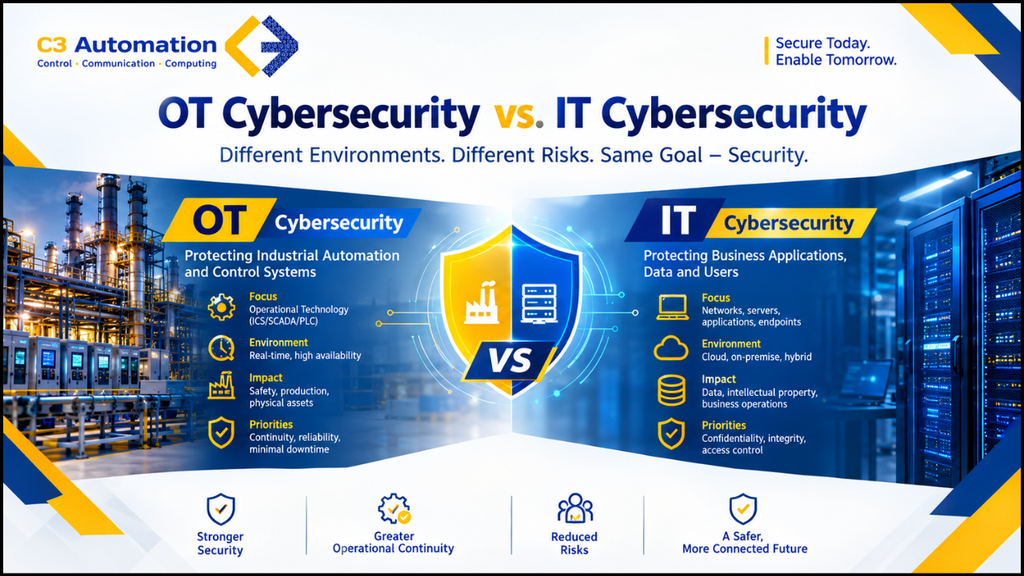
IT cybersecurity mainly keeps computers, apps, databases and business data safe. OT cybersecurity on the hand deals with systems that manage real-world processes and industrial operations.
In a setting keeping systems available reliable and safe is a top priority. That means any security measure must protect the network while not causing stops, in production or industrial work.
For instance a company might need to protect a PLC network. At the time it must make sure that data flows smoothly between PLCs, HMIs, SCADA systems and other automation devices without any interruptions.
Key Components of OT Cyber Security
A full industrial cybersecurity solution can have layers of protection.
1. Industrial Network Security
Industrial network security protects the systems that connect devices and control units.
Industrial networks may hold PLCs, switches, HMIs, SCADA servers, remote I/O devices and other gear. Network monitoring, access control, segmentation and secure communication can lower cybersecurity risks.
2. PLC Cybersecurity
PLCs run industrial processes so PLC cybersecurity is a vital part of an OT security plan.
Organizations should control access to PLCs, monitor their communication, protect engineering workstations and stop configuration changes.
PLC network security can also protect communication between controllers and other industrial devices.
3. SCADA Cybersecurity
SCADA systems give monitoring and supervisory control over operations. SCADA cybersecurity focuses on protecting SCADA servers, workstations, communication networks and connected field devices.
Security measures can stop access and protect operational data from tampering.
4. HMI Cybersecurity
HMIs let operators interact with equipment and processes. HMI cybersecurity stops users from getting into control interfaces.
Strong authentication, user permissions, network segmentation and secure system configuration can protect HMI environments.
5. Industrial Ethernet Security
Industrial Ethernet has become a part of modern automation networks.. Connecting industrial devices through Ethernet also needs proper security measures.
Industrial Ethernet security can involve network segmentation, secure switches, access control, monitoring and other protective measures.
Secure industrial Ethernet infrastructure helps organizations build reliable and protected communication networks.
Network Segmentation for OT Environments
Network segmentation for OT is a practice that keeps different parts of an industrial network separate.
For example an organization may separate:
- Corporate IT networks
- Industrial control networks
- SCADA systems
- PLC networks
- Engineering workstations
- Remote access systems
- Industrial IoT devices
OT network segmentation can limit the movement of threats between systems. If one part of the network is compromised OT network segmentation can help prevent the issue from spreading across the industrial environment.
Industrial IoT and OT Cyber Security
Industrial IoT has changed how organizations gather and study data. Sensors, gateaways, controllers and other connected devices deliver up-to-date information about processes.
Each device that connects can also bring new cybersecurity risks.
Industrial IoT cybersecurity is key to protecting devices and the communication systems they rely on. Companies using security should focus on device authentication, secure data transmission, access control, network monitoring and frequent security checks.
Security for IoT, in automation is especially important now. More industrial systems are being linked to cloud platforms and remote monitoring tools.
Protecting Industrial Communication
Industrial automation relies on communication between controllers, sensors, HMIs, SCADA systems and other equipment. Industrial communication protocols make it possible for these devices to share information.
Communication channels need to be properly protected to lower the chances of unauthorized access or data being changed.
Industrial communication security can involve:
- Secure network architecture
- Access control
- Network monitoring
- Segmentation
- Secure remote access
- Firewall security
- Device authentication
- security assessments
A strong plan for securing industrial communication allows companies to keep reliable connections while making their cybersecurity better.
Industrial Firewall Solutions
Firewalls can add another level of protection between parts of a network.
Industrial firewall solutions can help manage which devices and systems are allowed to talk to each other. They can be used to keep OT networks safe from unwanted traffic while still letting necessary industrial communication happen.
Firewalls need to be set up based on the needs of the particular industrial environment.
Common OT Cybersecurity Threats
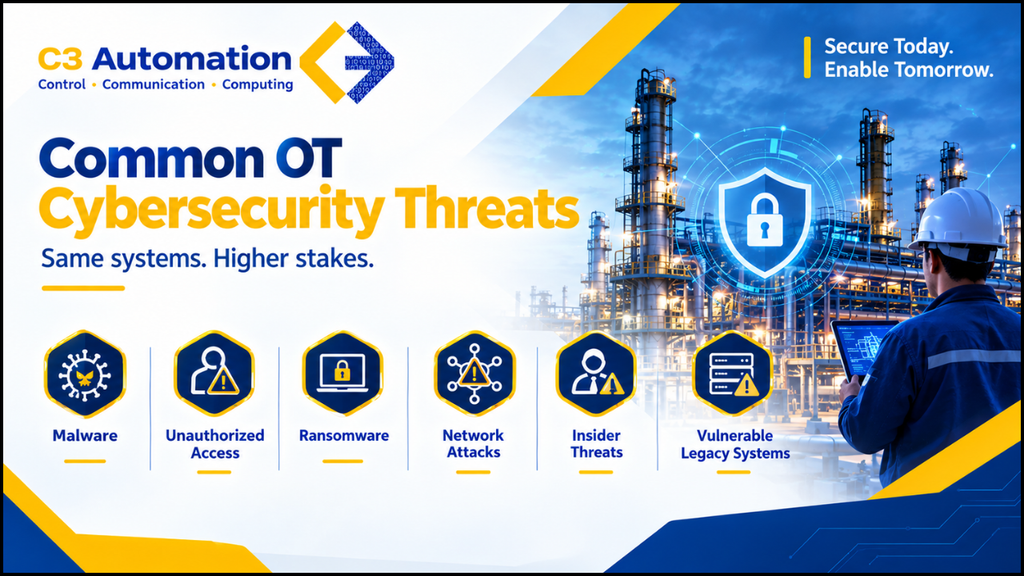
Industrial organizations might deal with kinds of cybersecurity problems such as:
Malware
Malware can get into industrial computers, engineering workstations, servers and other connected systems.
Unauthorized Access
Weak passwords, remote access setups and too much user access can let people get into systems without permission.
Ransomware
Ransomware can stop organizations from using systems and data which could lead to big problems with work.
Network Attacks
Bad people might try to take advantage of weaknesses in networks or devices that are connected.
Insider Threats
Workers, people who work for the company on contract or others who are allowed to use systems might cause security issues by accident or on purpose.
Vulnerable Legacy Systems
Some industrial places still use equipment that wasn’t made with today’s security needs in mind.
Best Practices for OT Cyber Security
Organizations can strengthen their OT security solutions by following a layered cybersecurity approach.
Identify Critical Assets
Create an inventory of PLCs, SCADA systems, HMIs, industrial PCs, switches, communication equipment, and other connected assets.
Segment Industrial Networks
Implement secure industrial networks by separating critical OT systems from corporate IT networks and other less trusted environments.
Control User Access
Use appropriate authentication and access permissions to ensure that users can only access systems required for their responsibilities.
Monitor Network Traffic
Continuous monitoring can help identify unusual communication patterns, unauthorized devices, and potential security incidents.
Secure Remote Access
Remote access should be carefully controlled and protected using appropriate authentication and security measures.
Update and Maintain Systems
Where practical, keep operating systems, applications, network equipment, and security solutions updated according to the requirements of the industrial environment.
Develop an Incident Response Plan
Organizations should have procedures for detecting, containing, investigating, and recovering from cybersecurity incidents.
The Role of Industrial Networking in OT Security
Industrial networking provides the communication foundation for modern automation systems. Industrial Ethernet switches, communication interfaces, cables, gateways, and other networking components connect different parts of an industrial environment.
Therefore, industrial network cybersecurity should be considered when designing or upgrading an automation network.
A secure industrial networking architecture can help organizations improve connectivity while reducing unnecessary cybersecurity exposure.
OT Cyber Security for Modern Industrial Environments
As manufacturing, energy, oil and gas utilities and other industries use automation technologies cybersecurity must be part of the overall system design.
Industrial cybersecurity solutions should not be looked at on their own from automation and networking. Instead cybersecurity must be built into the structure from the start.
Solutions that include networking, secure communication, network segmentation, monitoring and access control can help build stronger automation environments.
How C3 Automation Supports Secure Industrial Connectivity
C3 Automation offers automation and networking solutions that are made to work in modern industrial settings. The company has a range of products that deal with communication, Industrial IoT, industrial Ethernet, automation and networking.
For companies that want to make their OT cybersecurity better, choosing industrial networking and communication equipment is a key step in creating a secure and reliable automation setup.
When companies use the industrial networking tools along with cybersecurity best practices they can make their connections better and keep important operating systems safe.
Conclusion
Operational Technology (OT) cybersecurity is becoming more important as industrial automation systems get more connected. Things like PLCs, SCADA systems, HMIs, Industrial IoT devices and industrial Ethernet networks need protection from unauthorized access and cyber threats.
A layered approach that includes industrial automation cybersecurity, PLC cybersecurity, SCADA cybersecurity, industrial network security, industrial Ethernet security, network segmentation, secure communication and Industrial IoT cybersecurity can help organizations build stronger OT environments.
For businesses running industrial facilities cybersecurity should be part of the planning process, for automation and industrial networks—not something added later.
FAQ
- What is OT Cyber Security?
OT Cyber Security is the practice of protecting operational technology systems, industrial control systems, industrial control systems, automation equipment, automation equipment and industrial networks industrial networks from cybersecurity threats.
- Why is OT cybersecurity important?
OT cybersecurity helps protect industrial systems, critical industrial systems from unauthorized access, unauthorized access, malware, malware, ransomware, ransomware, network attacks, network attacks and other threats that can affect production, production, safety, safety and operational continuity, operational continuity.
- What is the difference between OT and IT cybersecurity?
IT cybersecurity primarily protects business systems, business systems, applications, applications and data and data while OT cybersecurity focuses on systems, industrial systems and physical processes physical processes such as PLCs, PLCs, SCADA, SCADA, HMIs, HMIs and industrial networks, industrial networks.
- What is PLC cybersecurity?
PLC cybersecurity involves protecting logic controllers, programmable logic controllers and their communication networks, their communication networks, against unauthorized access, unauthorized access, malicious changes, malicious changes and other cybersecurity threats and other cybersecurity threats.
- How does network segmentation improve security?
Network segmentation separates parts of an industrial network different parts of an industrial network helping limit unauthorized communication helping limit unauthorized communication and reducing the potential spread of cybersecurity threats the potential spread of cybersecurity threats.
- What is Industrial IoT cybersecurity?
Industrial IoT cybersecurity protects industrial devices, connected industrial devices, sensors, sensors, gateways, gateways, networks, networks and systems systems used to collect and exchange operational data, collect and exchange operational data.
- How can organizations improve industrial network security?
Organizations can improve industrial network security, industrial network security through asset monitoring, asset monitoring, network segmentation, network segmentation, access control, access control, secure access, secure remote access, traffic monitoring, traffic monitoring, firewall protection, firewall protection and regular security assessments and regular security assessments.